
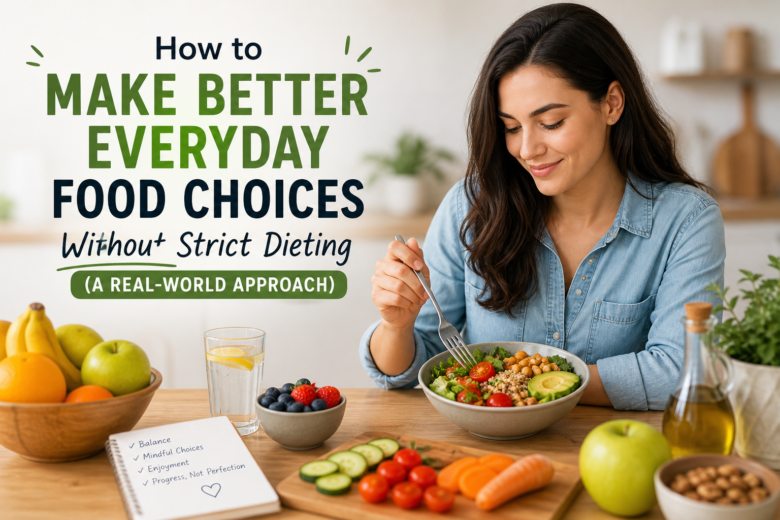
Healthy eating is often presented as a rigid system—complete with rules to follow, foods to avoid, and goals to achieve.
While this strategy currently works for many, it is difficult to sustain strict dietary rules over the long term. It requires significant planning, effort, and self-discipline—something that is not always feasible in practice.
A more sustainable approach is not about strict restrictions, but rather about improving your daily food choices.
The goal is not perfection, but developing awareness and making increasingly informed choices. Over time, these small improvements lead to significant results.
In this article, I will delve deeper into how you can eat in a way that is flexible, practical, and sustainable.
Why Diets Don’t Work:
Strict diets involve restrictions.
They may require you to eliminate certain foods, follow a rigid meal plan, or meticulously track everything you eat. While this may yield short-term results, it often leads to:
- Mental fatigue
- Reduced flexibility
- Difficulty maintaining a regular sleep schedule
- And, ultimately, a lack of self-discipline
In practice, factors such as time, convenience, social environment, and energy levels all influence people’s food choices. If a dietary system ignores these factors, it becomes difficult to sustain.
That is why many people, after a period of strict dieting, eventually revert to their old eating habits.
A Simpler Perspective: Focus on Direction, Not Perfection
Instead of asking yourself, “Is this meal perfect?”
Ask yourself instead:
“Is this better than my usual choices?”
This reduces stress and allows you to make progress without resorting to extreme measures.
For example:
- Opt for a light evening meal instead of a large one.
- Increase the variety in your dishes instead of always eating the same thing.
- Adjust your perception of portion sizes instead of strictly controlling them.
These are small changes, but they are easier to implement.
Eating Habits in Daily Life
In daily life, most eating habits are not formed under perfect conditions.
They often occur:
- During a busy schedule
- When you are exhausted
- When you have limited choices
- In social situations
Instead of trying to control every situation, it is better to prepare yourself in advance.
Consider, for example:
- “The best choice”
- “The good-enough choice”
- “The honest decision”
In this way, you can remain consistent in your eating habits without striving for perfection.
Increase Your Awareness Without Overthinking
You don’t need to focus on every single detail to improve your eating patterns.
A simple way to increase your awareness is to pause briefly before eating and ask yourself:
- Does this lunch seem “balanced”?
- Does it leave me feeling satisfied?
- Am I eating because I’m hungry, or is it just a habit?
These small self-checks can heighten your awareness without overcomplicating things.
“Over time, making better choices becomes more natural.”
The Importance of Food Environment
Your environment plays a major role in your eating habits.
If your surroundings make certain choices easier, you’re more likely to follow them.
For example:
- having simple, ready-to-eat options available
- reducing reliance on highly processed convenience foods
- organizing your space in a way that supports better decisions
You don’t need a perfect setup—just small adjustments that reduce friction.
Making Balanced Choices Without Rules
Instead of strictly adhering to rules, aim for overall balance.
A balanced diet typically includes:
- Satisfying foods
- Healthy food
- And also some treats
This approach doesn’t require strict rules, yet it helps you develop healthier eating habits.
It also makes meals more satisfying, making you less likely to overeat or snack between meals.
Coping with Bad Days
Sometimes, days don’t go according to plan.
Sometimes, situations like these arise:
- Irregular meals
- Limited choices
- Disrupted routines
- This is normal.
What matters is how you handle it.
Instead of trying to “make up for it” or restrict yourself, try to resume your normal eating pattern as soon as the opportunity arises.
It’s about the long term—not just a single day.
Avoiding the Cycle of Restriction and Overcorrection
A common trend in nutrition is the following:
strict control → break in routine → overcorrection
This cycle is unstable.
A more stable approach is moderation:
- Avoid extreme diets
- Avoid drastic adjustments
- Maintain a consistent yet flexible eating pattern
This helps you develop healthy eating habits.
Eat According to Circumstances, Not Rules
Food choices depend on specific circumstances.
For example:
- Your activity level
- Your sleep schedule
- Your energy needs
- Your environment
What works today might not work tomorrow.
Don’t try to follow the same diet plan every day; adapt it to your circumstances.
Flexibility fosters long-term stability.
Creating a Sustainable Eating Pattern
We aim to create an eating pattern that feels natural over time.
This pattern should:
- Fit into your daily routine
- Be effortless
- Be flexible
Promote your physical and mental well-being
Don’t strive for perfection; simply stick to it.
A Practical Approach to Nutrition
Keep it simple—no complicated plans needed:
- Maintain a balanced diet
- Monitor your intake
- Reduce stress
This reduces decision fatigue and makes it easier to manage your daily nutrition.
Long-Term Effects
Nutrition isn’t about quick results.
It is a habit that takes weeks, months, or even years to develop.
Gradual improvement is always better than short periods of intense restriction.
Conclusion
You don’t need a strict diet plan to improve your nutrition.
What you need is a system that helps you make better choices in your daily life.
By focusing on awareness, flexibility, and consistency, you can learn a sustainable way of eating that fits easily into your daily life without creating an extra burden.
Small steps of progress ultimately lead to big and lasting changes.
Frequently Asked Questions
1. Do I have to eat perfectly healthy while on a strict diet?
No. A flexible and balanced diet is more sustainable and often more effective in the long run.
2. How can I change my eating habits without tracking all my food intake?
Awareness is key. A simple check before meals can help you make healthier choices without having to track everything.
3. What should I do if I eat unhealthily for a day?
Return to your usual pattern without overcorrecting. One day does not define your overall progress.
4. Can simple changes truly improve one’s diet?
Yes. Consistent, small improvements are more effective than drastic short-term changes for developing stronger, sustainable habits.
5. How can I maintain a healthy eating routine?
Choose methods that are simple, flexible, and compatible with your daily routine. If a method aligns with your lifestyle, it is easier to stick to it.

Ayaan Zahid writes about practical wellness with a focus on balance, consistency, and everyday habits. He believes health advice should be simple, realistic, and easy to apply without pressure. His content is created for general informational purposes only and does not replace professional medical advice. Through HistoryFlare, he shares clear, approachable insights to help readers improve energy, mindset, and overall well-being in a sustainable way.