
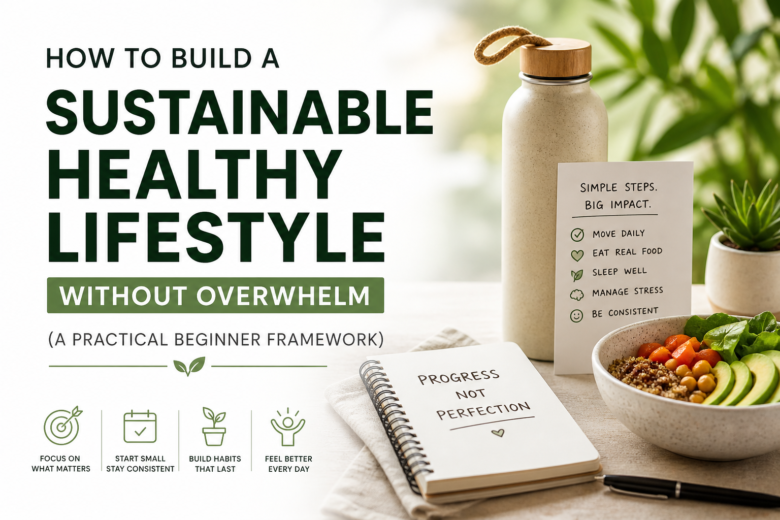
Creating a healthy lifestyle sounds simple, but putting it into practice can be overwhelming.
Many people begin with enthusiasm, set ambitious goals, and try to change every aspect of their lives at once. They might make good progress for a few days or weeks, but eventually, it becomes difficult to sustain. Eventually, they give up and start again.
This isn’t because people lack self-discipline. It’s because their methods are often too radical, too rigid, or disconnected from reality.
A sustainable lifestyle is entirely different. It is based on small, repeatable actions that fit seamlessly into your daily routine. It doesn’t force change upon you; instead, it gradually adjusts your daily life in a manageable and predictable way.
This guide will help you build such a system—one that enhances your health without causing additional stress.
Why Most Lifestyle Changes Fail
Before designing a better system, it is important to understand why so many attempts fail.
The most common pitfalls are the following:
- Trying to fix everything at once
- Inflexible habits that don’t fit into your daily routine
- Relying too heavily on motivation rather than structure
- Having unrealistic expectations
- Ignoring your energy levels and time constraints
It is difficult to stick to a routine if it requires too much effort—especially on busy days or days when your energy is low.
Sustainability stems from reducing friction, not from increasing effort.
Shift Your Focus: From Goals to Systems
Goals are important, but on their own, they do not ensure sustainability. For example:
- “I want to be healthier.”
- “I want to have more energy.”
- “I want to stick to this.”
These intentions are clear, but they don’t provide you with the direction needed to put them into practice.
The key is systems.
A system is a series of simple, repetitive activities that guide you toward your goals without requiring you to make a decision every single time.
For example:
- Drinking water at set times.
- Scheduling short periods of activity.
- Following a balanced diet using a simple framework.
With a system, it is easier to stay consistent, because you no longer have to rely on willpower every day.
Start Small to Build Momentum
One of the best ways to avoid feeling overwhelmed is to start with just one area.
Don’t try to do everything at once. Choose one thing to start with:
- Daily activities
- Nutritional composition
- Sleep patterns
- Relaxation techniques
By focusing on a single area, you create the space to develop habits without pressure.
Once it has become a habit, you can gradually incorporate it into your daily routine.
Make It Easy Enough to Repeat
A rule of thumb:
If a habit feels difficult to repeat daily, it’s too complex.
Sustainable habits are:
- Easy to start
- Require little effort
- Adaptable
For example:
- Sticking to a long workout is difficult, but a 10-minute walk is simple.
- A balanced eating pattern is easier than a strict diet.
- Short breaks are easier than workouts focused entirely on recovery.
Repetition—not intensity—creates habit stability.
Based on Your Existing Daily Habits
New habits are easier to adopt when they align with your current activities.
This approach reduces friction and helps habits become automatic.
For example:
- Drink water after waking up
- Stretch after work
- Take a walk after dinner
You don’t need to remember or schedule these habits separately, because you have already linked them to existing behaviours.
Create a Plan That Fits Your Life
A plan that doesn’t suit your lifestyle is doomed to fail.
Don’t force yourself into an ideal schedule; instead, adapt your daily routine to fit your life.
Take the following into account:
- Your working hours
- Your energy levels
- Your available time
- Your environment
For example:
- If your mornings are always hectic, opt for simpler plans.
- If you are exhausted in the evening, skip the more challenging activities.
- When space is limited, choose activities that save space.
- If your plan aligns with your lifestyle, it is easier to stick to it.
It is not about energy management but about time management.
Managing Energy Instead of Just Time
Your energy levels typically fluctuate throughout the day. If you attempt challenging activities when your energy is low, you will likely feel frustrated and find it difficult to stick to your routine.
A better approach:
- Use your high-energy moments for activities that require concentration.
- Use your lower-energy moments for simple tasks.
- Take occasional breaks to let your mind relax.
This will make your daily routine feel more natural and effortless.
Establish a Simple Daily Routine
You don’t need complicated plans to maintain consistency. A simple schedule is sufficient to structure your day.
Morning
- Start with a refreshing glass of water and plenty of sunlight.
- So, don’t dive straight into stressful work.
- Ensure a calm start to the day.
Afternoon
- Eat a balanced diet to keep your energy levels up.
- Take short breaks between activities.
- If possible, incorporate some light physical exercise.
Evening
- Limit your screen time.
- Take it easy.
- Prepare your body for sleep.
With this system, you can maintain consistency without having to adhere strictly to a rigid schedule.
Avoiding the All-or-Nothing Mindset
Many people believe that a plan isn’t worth pursuing if they can’t execute it perfectly.
This mindset leads to unnecessary stress and a lack of consistency.
Flexibility is a better choice.
Instead of giving up on a habit entirely, try an easier variation:
- Short workouts
- Simpler meals
- Brief moments of relaxation
These small changes can ensure that habits remain alive and sustainable.
Track Your Progress Simply
You don’t need advanced tools to track your progress. Instead, focus on how you feel over time:
- Do you feel more organized?
- Do you have more energy?
- Do daily tasks feel easier?
- Has your stress decreased?
These are all strong signs of progress.
You can also take a moment each week to review your progress and adjust your schedule if necessary.
Expanding Your Routine Gradually
Only introduce the next habit once the previous one has become firmly established.
For example:
- Start by ensuring you drink enough water. Incorporate some light physical activity.
- Improve your eating habits.
- Add some relaxation techniques.
This gradual approach can help you avoid excessive stress and is more conducive to long-term consistency.
Common Mistakes to Avoid
- Being too hasty.
- Imitating the complex daily routines of others.
- Ignoring your own schedule.
- Seeking quick results.
Getting easily distracted by unimportant matters.
By avoiding these pitfalls, it becomes easier to stick to your plan right from the start.
Conclusion:
Building a sustainable, healthy lifestyle isn’t about massive efforts or perfect habits.
Instead, it is about:
- A simple system
- Consistent behavior
- Realistic expectations
If your habits are easy to maintain and can be integrated into your daily life, persistence will come naturally.
Start small, be persistent, and let your habits take shape gradually.
Frequently Asked Questions
1. How long does it take to develop a healthy lifestyle?
That depends on your persistence. Most people will notice subtle changes within a few weeks, but long-term changes require repeated habit formation.
2. Does maintaining good health require a strict schedule?
No. Flexible, simple habits are better than strict schedules, as they are easier to sustain in practice.
3. Where should I start?
Start with one aspect, such as hydration, exercise, or nutrition. Focusing on one new habit at a time makes it easier to stick with it.
4. What if I miss a day?
It is normal to miss a day. The most important thing is to get back to your daily routine and not overthink it. In the long run, consistency is more important than perfection.
5. Do small actions really have an impact?
Yes. Consistently taking small actions—day in, day out—can ultimately have a huge impact. They are easier to sustain and more durable than major changes.

Ayaan Zahid writes about practical wellness with a focus on balance, consistency, and everyday habits. He believes health advice should be simple, realistic, and easy to apply without pressure. His content is created for general informational purposes only and does not replace professional medical advice. Through HistoryFlare, he shares clear, approachable insights to help readers improve energy, mindset, and overall well-being in a sustainable way.